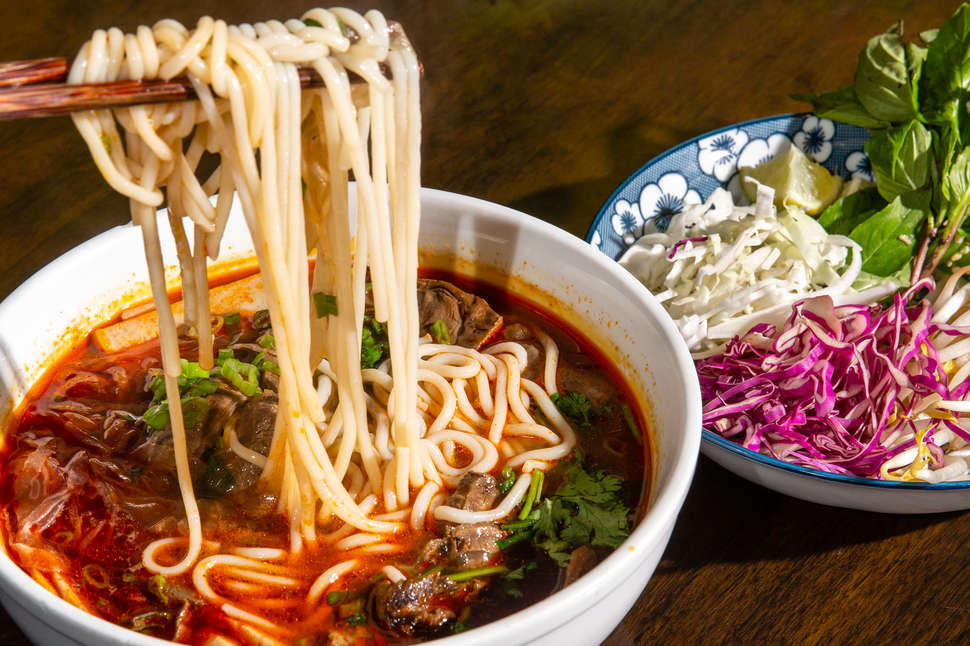
Vietnamese cuisine encompasses the foods and beverages of Vietnam, and features a combination of five fundamental tastes (Vietnamese: ngũ vị) in overall meals. Each Vietnamese dish has a distinctive flavor which reflects one or more of these elements. French cuisine has also had a major influence due to the French colonization of Vietnam. Traditional Vietnamese cooking is greatly admired for its fresh ingredients, minimal use of dairy and oil, complementary textures, and reliance on herbs and vegetables. With the balance between fresh herbs and meats and a selective use of spices to reach a fine taste, Vietnamese food is considered one of the healthiest cuisines worldwide.
As people respect balance rules, Vietnamese cuisine always combines fragrance, taste, and color. Vietnamese cuisine always has five elements which are known for its balance in each of these features. Many Vietnamese dishes include five fundamental taste senses (ngũ vị): spicy (metal), sour (wood), bitter (fire), salty (water) and sweet (earth), corresponding to five organs (ngũ tạng): gall bladder, small intestine, large intestine, stomach, and urinary bladder.
Vietnamese dishes also include five types of nutrients (ngũ chất): powder, water or liquid, mineral elements, protein, and fat. Vietnamese cooks try to have five colours (ngũ sắc): white (metal), green (wood), yellow (earth), red (fire) and black (water) in their dishes.
Dishes in Vietnam appeal to gastronomes via the five senses (năm giác quan): food arrangement attracts eyes, sounds come from crisp ingredients, five spices are detected on the tongue, aromatic ingredients coming mainly from herbs stimulate the nose, and some meals, especially finger food, can be perceived by touching. Whether complex or simple, Vietnamese dishes also offer satisfying mouthfeel during the dining enjoyment.
 MAI AND FOOD