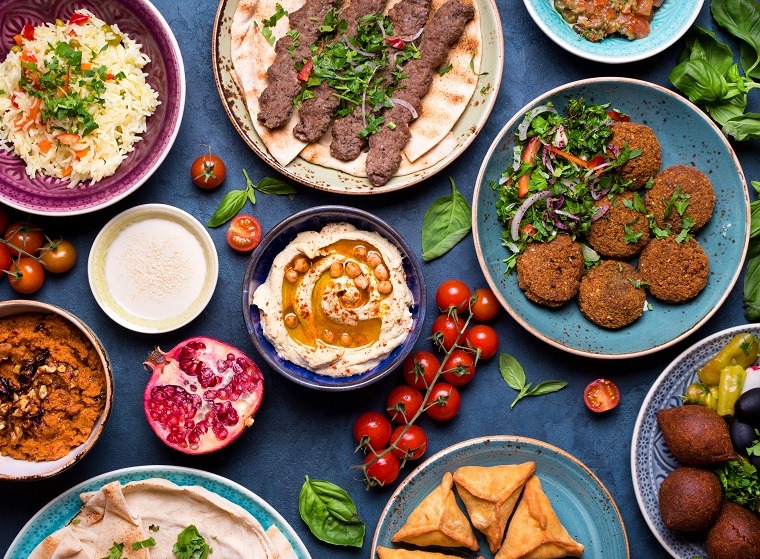
West Asian cuisine significantly overlaps with the Middle Eastern cuisine and the inclusion of the Caucasus.
West Asian cuisine is the cuisine of the various countries and peoples of West Asia. The cuisine of the region is diverse while having a degree of homogeneity. Some commonly used ingredients include olives and olive oil, pitas, honey, sesame seeds, dates, sumac, chickpeas, mint and parsley. Some popular dishes include kibbeh and shawarma.
Cereals constitute the basis of West Asian diet, both historically and today. Wheat and rice are the major and preferred sources of staple foods. Barley is also widely used in the region and maize has become common in some areas as well. Bread is a universal staple, eaten in one form or another by all classes and groups practically at every meal.
Butter and clarified butter (also known as samna) are, traditionally, the preferred medium of cooking. Olive oil is prevalent in the Mediterranean coastal areas. Christians use it during Lent, when meat and dairy products are excluded, and Jews use it in place of animal fats such as butter to avoid mixing meat and dairy products.
Lamb and mutton have always been the favored meats of West Asia. Pork is prohibited in both Islam and Judaism, and as such is rarely eaten in the region. Prominent among the meat preparations are grilled meats, or kebabs. Meat and vegetable stews, served with rice, bulgur, or bread, are another form of meat preparation in the region.
Vegetables and pulses are the predominant staples of the great majority of the people in the West Asia. They are boiled, stewed, grilled, stuffed, and cooked with meat and rice. Among the green leafy vegetables, many varieties of cabbage, spinach, and chard are widely used. Root and bulb vegetables, such as onions and garlic, as well as carrots, turnips, and beets are equally common.
 MAI AND FOOD